
Fountain Valley, CA · Garage Door Service
What a Service Call Actually Covers
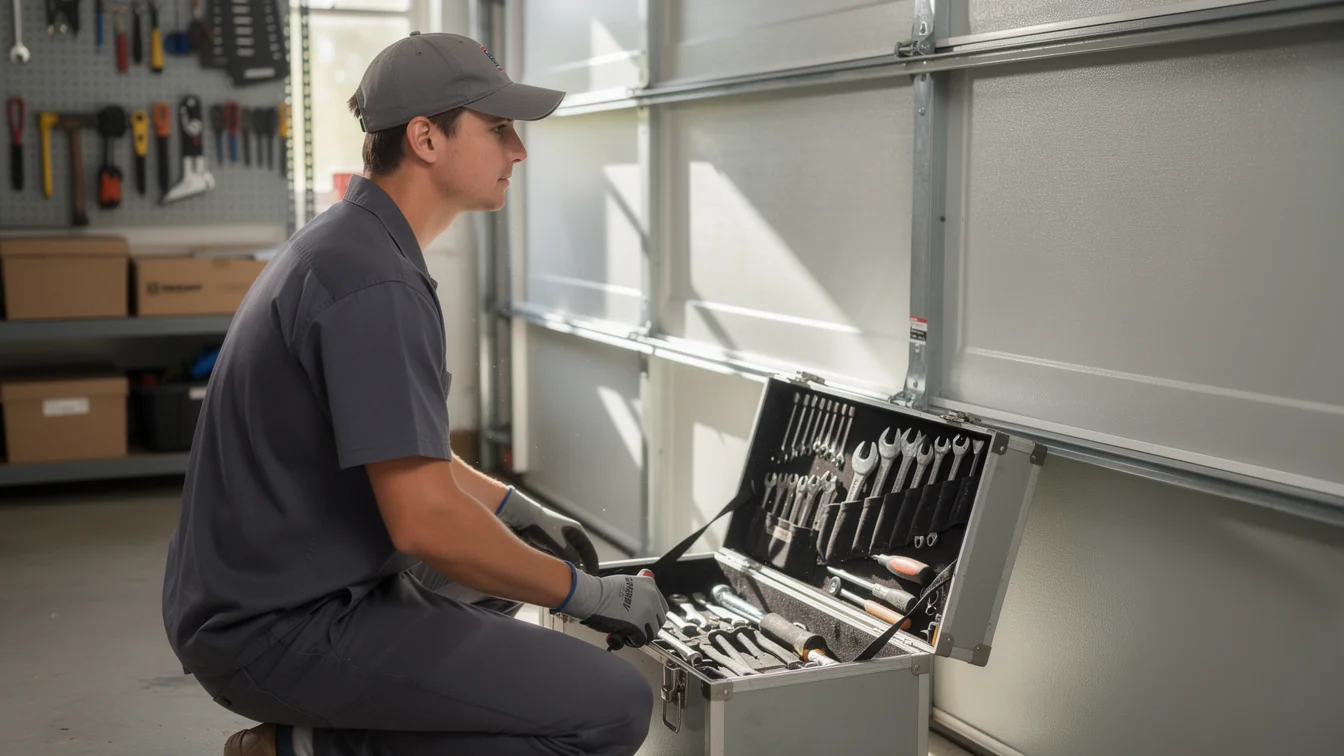
A look at what our techs actually check on a Fountain Valley service call, tied to the age of the housing stock here and the mild coastal climate band.
- Repairs & new doors
- Springs & openers
- Serving 4 nearby communities
What Local Conditions Do
Fountain Valley sits in a mild temperate climate band, which sounds like good news for a garage door and mostly is. You're not fighting the freeze-thaw cycle that cracks concrete slabs or shrinks steel tracks in colder parts of the country. But mild doesn't mean nothing happens. The bigger factor here is age, not weather. Housing in this stretch of Orange County went up mostly between 1938 and 1995, with the median landing around 1969, and most of it clusters in that 1960s-70s build wave. A door installed when a house was built in 1969 has outlived three or four openers by now, and the track, the hinges, and the bottom bracket on the original frame don't always get swapped out when the opener does. On a service call, we're not guessing at what's behind the panel - we know the hardware era we're likely to find, and we check the bracket and track mounts before we touch the spring or the opener logic board.
That matters for diagnosis. A noisy door in a house built in 1969 is usually about worn original hardware, not a defect in a five-year-old opener.
Checking It Yourself
Before you call anyone, there are three things worth looking at yourself. First, pull the release cord and lift the door by hand - it should move with one hand and stay roughly where you leave it. If it drops or feels like dead weight, the spring is losing tension and that's not a DIY fix. Second, look at the track mounting brackets where they meet the wall studs. On houses from the 1960s-70s stock common across this area, those brackets are original steel, and after decades of vibration the lag screws can back out of the wood a sixteenth of an inch at a time - you'll see a hairline gap if you look closely. Third, listen for a grinding or popping sound specifically when the door is near the top or bottom of travel, which usually points to a bent track section rather than the opener.
What you shouldn't do is loosen or remove anything near a wound torsion spring. That's the one place where a confident homeowner with the right tools still gets hurt, and it's the main reason we ask people to call rather than keep tightening a set screw themselves.
The Problem
The recurring issue in homes built here is a mismatch between the opener generation and the original track and bracket hardware. Someone replaces a failing opener in year twenty, gets another fifteen years out of it, and by the time that second opener starts acting up, the track it's lifting against is now fifty-plus years old and was never designed for the lift speed of a modern unit. The symptom looks electrical - the door reverses, stalls, or throws an error code - but the cause is mechanical wear that the opener's sensors are correctly reacting to.
Across the broader area - 277,670 households and 112,065 owner-occupied houses - this pattern repeats enough that it's the first thing we rule in or out on an older home, before we open up the opener housing. It's cheaper to find on day one than after a tech has already swapped a logic board that didn't need swapping.
The Common Mistake
The mistake we see most is replacing the part that failed instead of the part that caused the failure. A snapped cable gets a new cable, the door works for two weeks, and then the roller that was actually dragging in a worn track takes out the new cable too. On a median household income of $103,703 in this area, most people aren't choosing the cheapest part on the shelf - they're choosing based on what a tech tells them needs doing, which puts some responsibility on us to say when a $40 part is a patch and when it's a real fix.
Our honest limitation: if your track and brackets are original to a house built anywhere near that 1969 median, a same-day call might get the door moving again, but we won't always have the exact replacement bracket for 1960s-era hardware on the truck. Some of that is special-order, and we'll tell you that up front instead of jury-rigging a fix that fails again in a month. Midway City and Stanton households run into the same hardware era we see here, three and seven miles up the road.
Frequently asked questions
Why does my garage door only make noise near the top of the track?
That's almost always a bent or misaligned track section, not the opener. On houses with original 1960s-70s track hardware, decades of door cycles can shift the bracket mounts slightly, so the rollers bind at one specific point in the travel instead of the whole run. A tech can usually spot it by running the door manually and watching where the roller hesitates.
Is it normal for an original 1969-era bracket to still be on the door?
It happens more than you'd think. Openers get replaced on their own schedule, but the track brackets bolted to the framing often outlast two or three openers. It's not automatically a problem, but it's the first thing worth checking if a newer opener is struggling, since it may be lifting against hardware older than itself.
Does the mild climate here mean less maintenance?
It helps - you're not dealing with ice-cracked panels or extreme thermal expansion in the track. But mild weather doesn't stop mechanical wear from decades of cycles, which is the bigger factor in homes built mid-century in this area. Lubrication and a hardware check still matter regardless of the weather.
What does a basic service call include?
A tech checks spring tension, track alignment, bracket mounting, cable condition, and opener operation, then tells you what's wearing out versus what's actually broken. We don't open a torsion spring assembly unless that's the confirmed issue, since that's the one repair with real risk if handled wrong.
Related garage door services in Fountain Valley
More garage door guides
Book garage door service in Fountain Valley
Call now or request a quote - tell us what the door is doing and where you are.