
Fountain Valley, CA · Garage Door Service
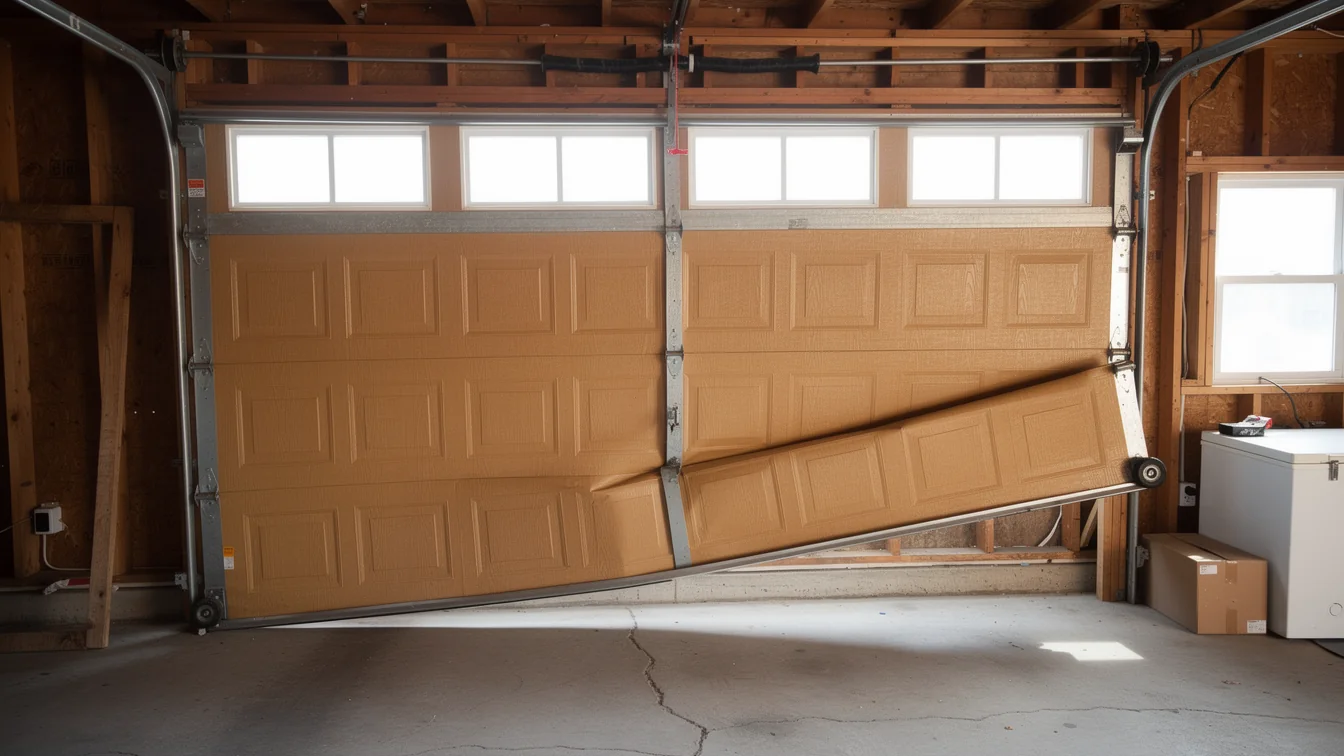
Why a Garage Door Goes Off Track in a Fountain Valley Home
Most Fountain Valley homes date to the 1960s-70s, with original track hardware under mild coastal conditions. Here's why doors still jump track.
- Repairs & new doors
- Springs & openers
- Serving 4 nearby communities
What Local Conditions Do
Fountain Valley's housing stock runs mostly 1938 to 1995, with the median build year sitting at 1969. That means a huge share of the doors in this town are hung on track brackets that were installed when Johnson or Lyndon was in office, bolted to framing that's shifted a little every year since. The climate here is mild temperate - no deep freezes, no monsoon season - so you don't get the dramatic rust-through or ice-jammed track you'd see in a harsher region. What you get instead is slow, steady wear: track brackets that have loosened a sixteenth of an inch at a time, rollers that have worn down gradually rather than cracking in a cold snap, and horizontal track that's drooped slightly on one side because the lag screws into 1960s-era studs never had much to grip in the first place. A door going off track in this town is rarely a sudden-weather problem. It's a slow-accumulation problem, which is exactly why a lot of homeowners don't notice until the door is grinding or binding on one side.
Checking It Yourself
Open the door partway and look at the horizontal track where it bolts to the framing above the door. On a house from the 1960s or 70s stock that makes up most of this area, check whether that bracket is still snug against the wood or whether you can see daylight behind it - a gap means the lag bolts have worked loose over decades of door cycles. Next, run your hand along the vertical track near the bottom roller. If it's bowed outward rather than dead straight, something has been pulling on it, usually a roller that's binding. Watch the door move through a full cycle and note if one side lags the other by even half a second - that's the first sign the rollers are riding unevenly in track that's no longer perfectly parallel. None of this takes special tools. It takes five minutes and a flashlight, and on a door of this vintage it's worth doing twice a year rather than waiting for the door to jump the rail entirely.
The Problem
On a house built in the window this town's stock falls into - 1938 to 1995, median 1969 - the track itself is almost never the first thing to fail. It's what's holding the track up. Mounting brackets lag-bolted into ceiling joists or wall studs loosen gradually under the stress of thousands of open-close cycles, and once a bracket shifts even slightly, the track it holds is no longer running true. The door's rollers then ride against one edge of the track instead of rolling flush, which wears a groove into the track wall and eventually lets the roller pop free entirely. Because this area's climate doesn't put extreme stress on the hardware through freeze-thaw cycling, the failure here is almost always mechanical fatigue and loosened fasteners rather than weather damage. That's actually good news: it's the kind of wear you can catch early. I'll say plainly that if the track itself is bent rather than just loose, tightening bolts won't fix it - bent track on a door this old usually needs replacing, not straightening.
The Common Mistake
The mistake I see most in houses from this era is someone forcing the door back onto the track by hand after it's jumped, without checking why it jumped in the first place. On a bracket that's loosened over fifty-plus years of cycles, forcing the door back on puts it right back on the same compromised hardware, and it comes off again within weeks, sometimes worse than before because the roller has chewed up more of the track edge. The other mistake is assuming a door that's run fine for decades on original 1960s-70s hardware doesn't need the brackets re-torqued just because the climate here is mild and nothing's rusted. Mild weather hides wear instead of announcing it. A loose bracket in a house built when this neighborhood went up doesn't corrode and crack - it just slowly lets the door walk sideways until one day it's off the rail.
Frequently asked questions
Why does my garage door keep coming off the track even after I push it back on?
If the mounting brackets holding the track to the framing have loosened - common in houses from the 1960s-70s stock common here - pushing the door back on doesn't fix the underlying slack. The door will walk off again because the track itself isn't sitting true anymore.
Is a door going off track a weather problem in Fountain Valley?
Not usually. This area's climate is mild temperate, so you don't get the freeze-thaw cycling that causes sudden track failures elsewhere. Here it's almost always slow mechanical wear in bracket hardware that's decades old, not a weather event.
Can I just re-tighten the track bolts myself?
You can check and snug loose lag bolts if the track itself is still straight. But if the track is visibly bowed or bent, tightening bolts won't correct that, and on a door this old, bent track generally needs replacing rather than adjusting.
Related garage door services in Fountain Valley
More garage door guides
Book garage door service in Fountain Valley
Call now or request a quote - tell us what the door is doing and where you are.